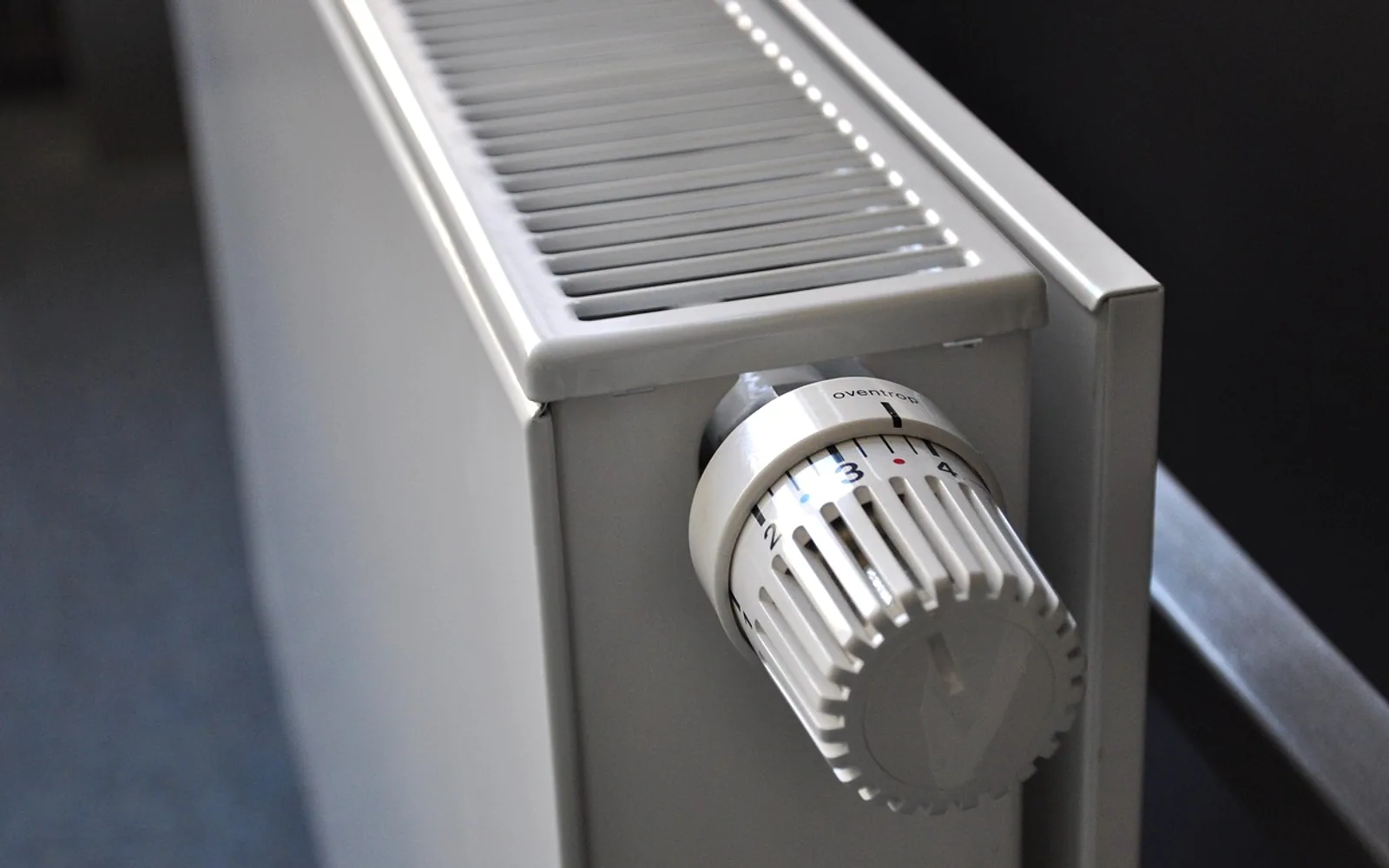
To bleed a radiator, switch the heating off and let the radiators cool, then use a radiator key to open the small bleed valve at the top corner by about a quarter turn. Air will hiss out. As soon as a steady trickle of water appears, close the valve again. Finish by checking the pressure gauge on the boiler, because releasing air also lowers the pressure in a sealed system.
Why air gets into radiators
Water in a central heating loop slowly releases dissolved gases as it is heated and cooled, and small amounts of air can enter when the system is drained, topped up or worked on. That air rises to the highest point it can find, which is usually the top of a radiator. The pocket stops hot water filling the panel, so part of the radiator stays cold and the room takes longer to warm up. The boiler, meanwhile, keeps burning fuel to make up the difference.
Signs a radiator needs bleeding
- The top of the panel is cool while the bottom is hot.
- Gurgling, ticking or trickling sounds when the heating comes on.
- One room is noticeably slower to warm than the others.
- Several radiators upstairs feel weaker than those downstairs.
If a radiator is cold at the bottom instead, or cold in the middle with warm edges, the cause is more likely sludge or a valve problem. Bleeding will not fix that; see the section on when to call for help below.
What you need
- A radiator key that fits the square spindle in the valve. Some modern valves take a flat-blade screwdriver instead.
- An old cloth or tea towel to catch drips.
- A small container or tray, handy if the valve sits low or the water is dark.
- The boiler manual, for checking and topping up pressure.
Step by step
- Turn the heating off. Wait until the radiators are cool enough to touch. Water in a working system can be very hot, and a pump that is running can draw air in rather than letting it out.
- Find the bleed valve. It is a small round fitting with a square centre, normally at one of the top corners of the radiator, on the opposite side to the main pipe connections or beside them, depending on the model.
- Protect the area. Hold the cloth under and around the valve. Move anything delicate away from the radiator.
- Open the valve slowly. Fit the key and turn it anticlockwise by roughly a quarter to half a turn. There is no need to open it further, and the small screw can drop out if you do.
- Let the air out. You should hear a hiss. Keep the key in place and wait.
- Close it when water appears. Once the hiss stops and water starts to spit or trickle out steadily, turn the key clockwise to close the valve. Snug is enough; overtightening can damage the seat.
- Repeat on other radiators that showed symptoms.
- Check the pressure before switching the heating back on.
Which radiator to start with
A common approach is to start downstairs with the radiator furthest from the boiler, work back towards it, and then do the same upstairs. Air tends to collect high up and at the ends of the circuit, so this order makes it less likely that air is pushed from one radiator into the next.
Checking and topping up boiler pressure
Combi and system boilers run on a sealed circuit with a pressure gauge on the front. Bleeding releases a little water, so the needle may drop. The manual will show the correct range, which is often marked in green on the dial. If it has fallen below that range, the system usually has a filling loop, a short hose or built-in lever that lets mains water in. Open it slowly, watch the gauge, and close it once the needle is back in range. If you are unsure, or the manual is missing, a heating engineer can show you once and you will know for next time. Older open-vented systems with a header tank in the loft refill themselves and have no front gauge.
How often should you bleed radiators?
There is no fixed timetable. Many households do a quick check at the start of the heating season, when the system has been idle for months, and then simply bleed any radiator that shows symptoms. Needing to bleed the same radiator every few days is not normal. It can point to a small leak, a faulty pressure valve or a pump or system design issue drawing air in, and that deserves a professional look.
Mistakes to avoid
- Bleeding with the heating on, which risks hot water and may pull air in.
- Opening the valve so far that the screw comes out.
- Forgetting to check pressure, leaving the boiler to lock out on the next cold morning.
- Assuming every cold radiator is an air problem.
When bleeding does not help
Cold bottoms or cold centres usually mean sludge, a mix of rust and debris that settles inside panels. A heating engineer can flush the system and may suggest a filter or inhibitor. A radiator that stays entirely cold may have a closed or stuck valve. Uneven heat across a house can also come from an unbalanced system or from heat leaking out through gaps; the guide to weatherstripping a door covers the second problem.
Radiators are not only fed by boilers. Air-to-water heat pumps also send warm water through radiators, and the same bleeding routine applies; the differences between the main heat sources are laid out in heat pump vs furnace. Rooms that stay cold also tend to suffer from damp glass in winter, which links to the advice on stopping condensation on windows.
Desk habits
Small routines that save time later
Picked up while writing the notes on this site.
Photograph the meter
A dated photo settles most arguments about estimated readings.
Name files by date
Year, month, day at the start of a filename keeps invoices and letters in order.
Sketch before you measure
A rough floor plan stops you missing an alcove or counting a strip twice.
Update the router
Check for firmware updates whenever you change your Wi-Fi password.
Put terms in writing
A short email confirming price and due date beats any verbal promise.